How to Use Tretinoin Cream with Moisturizer in 5 Easy Steps!
How to use tretinoin cream with a moisturizer is one of the most-searched skincare questions out there, and for good reason.
Tretinoin is powerful, but without the right moisturizer pairing, it can leave your skin dry, red, and peeling before you ever get to the good stuff.
In this guide, I am walking you through everything you need to know about using tretinoin cream with a moisturizer for beautiful, flawless skin, including my personal routine, the popular sandwich method, and my top moisturizer picks!
This post may contain affiliate links. Click to visit policies and disclosures
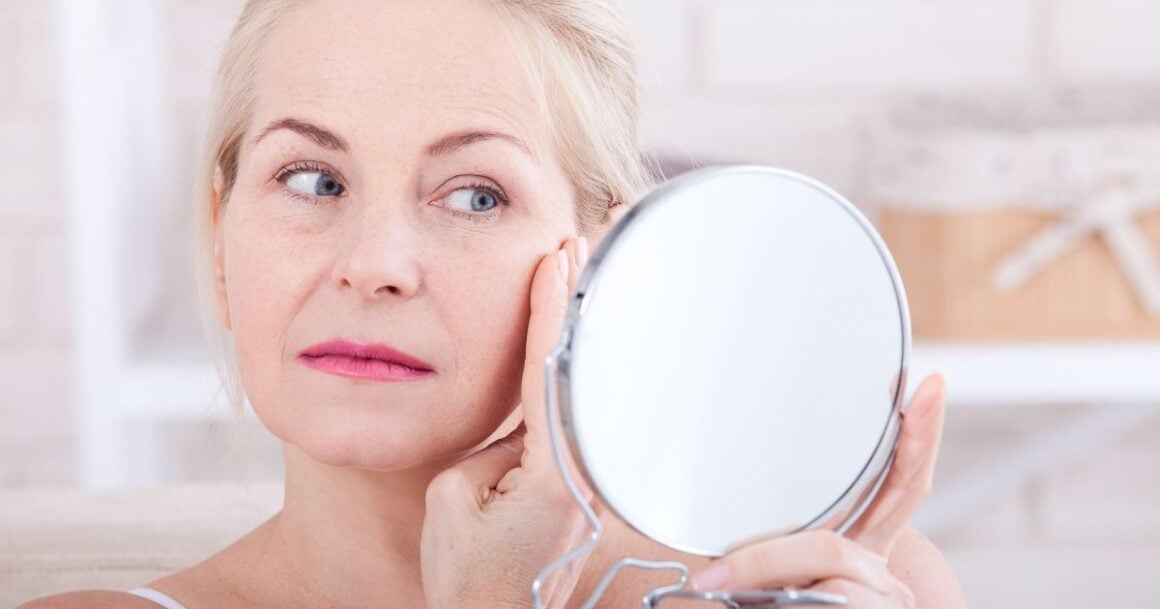
How to Use Tretinoin Cream with Moisturizer for Flawless, Beautiful Skin
What is Tretinoin Cream?
Tretinoin cream (also known as Retin-A, Altreno, Atralin, Avita, and Renova) is considered the gold standard in skincare for anti-aging and acne-prone skin!
It is a topical prescription medication used to treat severe acne, wrinkles, and other skin conditions.
Tretinoin cream increases skin cell turnover in the outer layers of the skin, which is what makes it so effective at smoothing texture, fading dark spots, and boosting collagen production.
Tretinoin cream comes in three different strengths: 0.1% (1 mg), 0.05% (0.5 mg), or 0.025% (0.25 mg).
The Difference Between Cream Vs. Gel Tretinoin?
Tretinoin Cream
The cream form of tretinoin has a creamy consistency and is thicker than the gel formulation. I prefer the cream form because it tends to be less irritating, especially for mature and dry skin types.
Tretinoin Gel
Gel tretinoin is clear with a thinner consistency than cream Retin-A. It absorbs more quickly and may be a better choice for oily or acne-prone skin types.
The Benefits of Tretinoin Cream
Tretinoin cream can reduce the appearance of fine lines and wrinkles, fade dark spots and hyperpigmentation, and even out skin tone.
It can also help minimize pore size, reduce breakouts, and boost collagen production for stronger, healthier-looking skin.
The most common benefits of Tretinoin Cream include:
- Reduced acne breakouts
- Diminished appearance of wrinkles and fine lines
- Improved skin tone and texture
- Increased collagen production
- Firmer skin
- Smaller pore size
- Reduced hyperpigmentation and discoloration
Side Effects of Tretinoin Cream
While there are many benefits to using a tretinoin treatment, it is important to know that side effects can occur, especially in the beginning stages, sometimes called the tretinoin purge.
Common side effects include redness, dryness, skin flaking or peeling, and sunlight sensitivity. You may occasionally experience more severe reactions such as rashes, hives, swelling, and itching. Always consult your dermatologist if symptoms are severe or persistent.
Common side effects of Tretinoin:
- Redness
- Dryness
- Flaking or peeling of the skin
- Sensitivity to sunlight
- Allergic reactions
- Hives
- Swelling
- Itching
The Benefits of Using Moisturizers with Tretinoin
This is where the magic happens. Pairing a good moisturizer with tretinoin cream is key to making the treatment work long term without destroying your skin barrier.
As a former spa director and licensed esthetician, I saw firsthand how many clients abandoned their retinoid treatments too early because of irritation that could have been easily avoided with the right moisturizer. Do not make that mistake!
According to GoodRx, moisturizing helps reduce skin problems such as extreme dryness and oiliness, both of which can worsen breakouts and accelerate premature aging.
Benefits of Moisturizing the Skin:
- Protection from the sun (when it contains SPF) and other environmental stressors like free radicals.
- Reduces the chances of skin problems like acne
- Moisturized skin looks and feels better. Dry skin equals older-looking skin.
- Anti-aging properties that help fight wrinkles and fine lines
The Best Moisturizers to Use with Tretinoin Cream
I’ve covered why it is so important to use a moisturizer with tretinoin, so now let’s find the right one for you.
With so many skincare products on the market, it can feel overwhelming.
When choosing the best moisturizer to use alongside tretinoin cream, keep two things in mind. First, avoid products that contain alcohol or synthetic fragrances, as these will aggravate any irritation.
Second, look for quality ingredients like hyaluronic acid, ceramides, and niacinamide, which help hydrate, protect, and calm the skin barrier.
CeraVe PM Facial Moisturizing Lotion
I love this moisturizer and have used it for years!
Cerave PM facial moisturizing lotion contains niacinamide to help calm the skin and hyaluronic acid to retain the skin’s moisture.
Formulated with three essential ceramides (to help restore and maintain the skin’s natural barrier and is Fragrance-free, paraben-free, oil-free, non-comedogenic, and allergy-tested
It is suitable for dry, sensitive, oily, acne-prone skin, and more.


More Great Moisturizers When Using Tretinoin Cream
I use CeraVe PM Facial Moisturizing lotion (above) with my Tretinoin cream.
I love all of the CeraVe skincare products!
That said, there are several wonderful moisturizers that can be used alongside Tretinoin cream that will give you fantastic results.


Neutrogena Hydro Boost Water Gel
This oil-free, non-comedogenic face lotion quenches dry skin to keep it looking smooth, supple, and hydrated day after day.
Neutrogena Hydro Boost Water Gel is formulated with hyaluronic acid; this gel formula absorbs quickly like a gel but has a cream’s long-lasting, intense moisturizing power.
Neutrogena hydro boost water gel is excellent for oily skin types.


Aveeno Positively Radiant Intensive Moisturizing Night Cream
This popular drugstore moisturizer is a hydrating night moisturizer made with soy and a boost of niacinamide and leaves the skin feeling hydrated all night.
It’s hypoallergenic with a fragrance designed to be gentle on the skin and is free of oil, parabens, phthalates, and dyes.
Aveeno Positively Radiant Intensive Moisturizing Night Cream is suitable for all skin types.
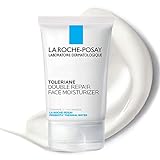

La Roche-Posay Toleriane Double Repair Face Moisturizer
La Roche-Posay skincare products have gained a ton of popularity and come highly recommended.
This oil-free face moisturizer is formulated with a high concentration of Prebiotic Thermal Water, Ceramide-3, Niacinamide & Glycerin.
Won’t clog pores and is suitable for sensitive skin.


Olay Regenerist Whip Face Moisturizer
Olay Regenerist Whip moisturizer works great with tretinoin.
This moisturizer is formulated with advanced Amino-Peptide Complex II to improve elasticity and firm skin while diminishing the appearance of fine lines and wrinkles.
You’ll experience skin that’s smooth, matte, and shine-free.
The Regenerist whip is matte and shine-free with a light and airy consistency.
Olay Regenerist Whip Face Moisturizer SPF 25. Perfect for all skin types.


Cetaphil Daily Hydrating Lotion for Face
This face lotion includes powerful moisturizing ingredients, such as hyaluronic acid, to hydrate the skin. This lightweight, non-comedogenic formula is suitable for acne-prone skin.
Hypoallergenic and fragrance-free, this daily lotion is dermatologist-tested and clinically proven to be gentle and non-irritating, even for the most sensitive skin.


First Aid Beauty Ultra Repair Cream
This super-rich moisturizer provides long-term hydration for dry, distressed skin and works great alongside Tretinoin.
It’s lightweight and suitable for use on the face and body. It’s an ideal face cream for sensitive skin types and is free from fragrances, parabens, and alcohol, and it is dermatologist-tested.
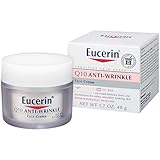

Eucerin Q10 Anti-Wrinkle Face Cream
Eucerin Q10 Anti-Wrinkle Face Cream is formulated to help protect against the damaging effects of free radicals and firm and moisturize for softer, smoother-looking skin.
Enriched with antioxidants, Vitamin E, and Beta-Carotene, fragrance, alcohol, dye-free, and non-comedogenic (won’t clog your pores!) Eucerin is a dermatologist-recommended product suitable for all skin types.


Kiehl’s Ultra Facial Moisturizer
This is Kiehl’s #1 best-selling face cream!
Formulated with squalane to strengthen and restore the skin’s moisture barrier, and glycerin to help retain moisture and soften the skin. It’s super lightweight and perfect for all skin types! Paraben-free and fragrance-free.
The Best Face Sunscreens to use with Tretinoin Cream:
EltaMD UV Clear SPF 46 Face Sunscreen
I love, love, love this sunscreen!
EltaMD UV Clear is a dermatologist-recommended sensitive skin sunscreen that is sheer, lightweight, and oil-free.
It plays nice under makeup and contains Niacinamide, a form of vitamin B3, that promotes the appearance of healthy-looking skin.
This sunscreen also comes in a tinted formula which is nice for those no-makeup days!


More Great Face Sunscreens to use with Tretinoin Cream:
Each face sunscreen listed below is popular with the skincare and beauty community and comes with high ratings and awesome user reviews!
- La Roche-Posay Anthelios Ultra-Light Mineral Sunscreen SPF 50
- EltaMD UV Daily SPF 40 Tinted Sunscreen Moisturizer Face Lotion
- Supergoop! Unseen Sunscreen SPF 40
- CeraVe Hydrating Face Lotion SPF 30
- TULA Skin Care Protect + Glow Daily Sunscreen Gel Broad Spectrum SPF 30
- Neutrogena Clear Face Liquid Lotion Sunscreen for Acne-Prone Skin SPF 50
- Coola Mineral Sunscreen Matte Tint SPF 30
- Dermalogica Solar Defense Booster SPF 50+
My Personal Experience using Tretinoin Cream with Moisturizer: (What I do)
I have been using tretinoin cream with a moisturizer for years now, and honestly, it has been a game-changer for my skin.
As a former Clinique makeup artist and spa director, and as a woman with mature skin myself, I can tell you that tretinoin, when used correctly, is one of the most effective anti-aging tools available without going under the knife.
I have personally struggled with large pores, fine lines, dark spots, and uneven skin tone, and I have seen a significant improvement in all of those areas since starting this routine. I recommend this combination to anyone who wants real, visible results.
True life confession: When I first started tretinoin, I did not love it. It dried out my skin and caused red, irritated patches.
But then, I discovered the sandwich method, and everything changed. Since then, I have not looked back!
How to Do the Tretinoin Sandwich Method (Step by Step)
The tretinoin sandwich method is the most effective way to use tretinoin cream with moisturizer without the dreaded dryness, redness, and peeling that sends so many people running.
The idea is simple. You “sandwich” the tretinoin between two layers of moisturizer, creating a protective buffer that allows the retinoid to do its job while keeping your skin barrier intact.
Here is exactly how to do it:
Step 1: Cleanse Wash your face with a gentle, fragrance-free cleanser and pat dry. Wait 10 to 20 minutes before moving to the next step. Applying tretinoin to damp skin increases absorption and irritation.
Step 2: Apply Your First Layer of Moisturizer (the bottom slice of bread) Apply a pea-sized amount of your chosen non-comedogenic moisturizer all over your face and neck. Wait 5 minutes for it to absorb fully before moving on.
Step 3: Apply Tretinoin (the filling) Use a pea-sized amount of tretinoin cream and dot it onto your forehead, cheeks, chin, and nose. Gently spread it in a thin, even layer. Avoid the corners of your eyes, nostrils, and lips, as these areas are extra sensitive.
Step 4: Apply Your Second Layer of Moisturizer (the top slice of bread) Wait 5 minutes for the tretinoin to settle, then apply another layer of hydrating moisturizer over the top.
This seals in moisture and reduces the intensity of any tretinoin purge or initial skin irritation.
Step 5: Add Sunscreen in the Morning If you are doing any part of this routine in the morning, finish with a broad-spectrum SPF 30 or higher.
Tretinoin increases sun sensitivity, making daily sunscreen non-negotiable.
Pro Tip: The more your skin adjusts to tretinoin over time, the less buffering you will need. Many women eventually move to applying tretinoin directly to bare skin once their skin tolerance builds up.
My Best Tips When Using Tretinoin Cream
Moisturize regularly.
It is essential to use a gentle moisturizer before and after applying tretinoin, and anytime your skin feels dry or shows signs of irritation. Never skip this step.
Exfoliate your skin.
Use a gentle exfoliator once or twice weekly to remove dead skin cells and keep your skin smooth and healthy. Avoid harsh scrubs, especially when you are first starting tretinoin.
Related Article: Why Exfoliate? Everything you need to know!
Watch for Product Interactions.
Avoid using harsh actives like benzoyl peroxide, glycolic acid, lactic acid, and salicylic acid when starting tretinoin cream.
These can cause serious irritation when combined with a retinoid. Always ask your dermatologist about which other skincare products to avoid before layering them into your routine.
Avoid excessive sun exposure and always wear a high-quality sunscreen with SPF 30 or higher.
FAQs: How to use Trentinion with Moisturizer:
What is Tretinoin cream, and what is it used for?
Tretinoin cream is a topical prescription medication used to treat acne and reduce the appearance of fine lines, wrinkles, and other signs of aging. It is a form of vitamin A and works by speeding up cell turnover and unclogging pores.
Why should I use Tretinoin cream with a moisturizer?
Tretinoin cream can be drying and irritating to the skin, so using a moisturizer is essential to keep the skin hydrated and prevent dryness, flaking, and peeling.
When should I apply Tretinoin cream and moisturizer?
Apply tretinoin cream at night before bed and use a moisturizer immediately after. Make sure your skin is clean and dry before applying both products.
How much Tretinoin cream and moisturizer should I use?
Use a pea-sized amount of tretinoin cream for your entire face. Use enough moisturizer to cover your face comfortably without overloading the skin.
How long should I wait between applying Tretinoin cream and moisturizer?
You can apply moisturizer immediately after applying tretinoin cream. With the sandwich method, you apply moisturizer first, then tretinoin, then another layer of moisturizer.
Can I use any moisturizer with Tretinoin cream?
Use a gentle, non-comedogenic moisturizer that is free of fragrances, alcohol, and other irritants. Look for ingredients like hyaluronic acid, ceramides, and niacinamide. Ask your dermatologist for recommendations if you are unsure.
What should I do if I experience dryness, peeling, or irritation while using Tretinoin cream?
Reduce the frequency of application or take a short break for a few days. You can also use a gentle hydrating application frequencyface mask to help alleviate dryness and peeling. Skipping a night here and there as your skin adjusts is completely normal.
How long does it take to see results from Tretinoin cream?
It can take several weeks to a few months to see full results, so be patient and consistent. Most people begin to notice smoother texture and fewer breakouts around the 4 to 6 week mark.
What is the sandwich method?
The sandwich method involves applying a layer of moisturizer before and after tretinoin to reduce irritation and dryness while still getting the full benefits of the treatment.
It creates a protective barrier that minimizes direct skin contact and helps maintain skin hydration.
Can I use niacinamide with tretinoin?
Yes! Niacinamide is actually one of the best ingredients to pair with tretinoin. It helps calm redness, strengthen the skin barrier, and even out skin tone without interfering with tretinoin’s effectiveness.
Many of the moisturizers on my list above contain niacinamide for exactly this reason!
Can I use hyaluronic acid with tretinoin?
Absolutely. Hyaluronic acid is a hydrating powerhouse and pairs beautifully with tretinoin. Apply it before your moisturizer to draw extra moisture into the skin and help offset any dryness from the retinoid.
How often should I use tretinoin cream?
When you are just starting out, use tretinoin two to three times per week to let your skin build tolerance.
Over time, you can gradually increase to every other night or nightly, depending on how your skin responds. Always follow your dermatologist’s guidance.
Is tretinoin safe for mature skin?
Yes, and it is actually one of the most recommended treatments for mature skin. Women over 40 and 50 can see tremendous results with tretinoin for wrinkles, skin laxity, hyperpigmentation, and overall skin texture.
The key is to start slowly and keep the skin well moisturized.

Related Beauty Articles
- The Best Anti-aging Treatments!
- The Best Foundation for Mature Skin
- 100 Things to put in your purse!
- The Amazing Benefits of Botox
- How to Tame Knee Wrinkles
- The Best Lipsticks for Over 40
- My (Morning) AM Skincare Routine
- Best Moisturizers for Older Gals
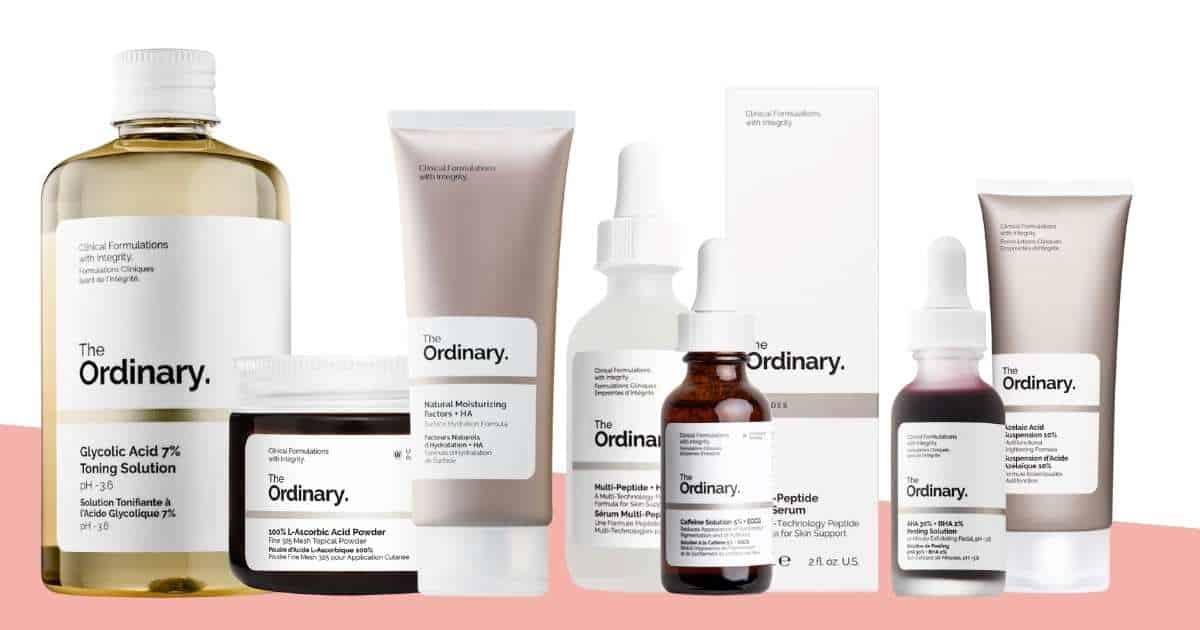
- My Favorite The Ordinary Products!
- Best Clinique Products for Mature Skin
- Life Essentials for Women
- The Best Lotions for Crepey Skin
Conclusion: How to Use Tretinoin Cream with Moisturizer
Using tretinoin cream with a moisturizer is one of the smartest things you can do for your skin at any age, and especially as we get into our 40s, 50s, and beyond.
Tretinoin works hard to accelerate skin cell turnover, improve skin texture, fade dark spots, and rebuild collagen. The moisturizer makes it all sustainable by protecting your skin barrier and keeping irritation in check.
Together, they are a powerhouse duo for healthy, glowing, pro-aging skin.
If you have been on the fence about starting tretinoin, I hope this guide gave you the confidence to take that next step.
And if you are already using it, I hope the sandwich method and moisturizer recommendations here make your routine even better.
Have you used tretinoin cream with a moisturizer? I would love to hear about your experience in the comments below!
Until next time,
XO, Christine

I’ve been keeping it real since 1963. 😊
I’m a child of God, devoted wife, proud mama and grandma, full-time creative, domestic engineer, and passionate self-care enthusiast.
I’m purpose-driven and do my best to live each day with intention—whether shopping for treasures, painting in my art studio, digging in the garden, or cooking up something yummy for my family.
I’m always up for a good chat and love collaborating with fellow creatives and brands.
Let’s connect—don’t be shy!