Embracing Change and Uncertainty (Later in Life 50+)
Hello and welcome to my article about embracing change and uncertainty later in life! I’m so glad you’re here!
I never thought change would feel harder as I got older—but it does.
In my 20s and 30s, life was moving so fast that change felt like part of the ride. But now, with more years behind me than ahead, change sometimes feels like a jolt, even when it’s expected.
And uncertainty? Let’s just say I’ve had to learn to make peace with it.
Whether you’re facing an empty nest, a career shift, unexpected loss, or just that subtle sense that something is shifting, I want you to know you’re not alone.
I’m right there with you—learning how to embrace change and uncertainty later in life with grace, faith, and courage.
In this post, I’m sharing what’s helped me navigate change and uncertainty, along with encouragement for your own journey.
This post may contain affiliate links. Click to visit policies and disclosures
Why I Think Embracing Change and Uncertainty Gets Harder Later in Life
When we’ve built a life full of routines, relationships, and a sense of identity, any disruption can feel overwhelming.
Change in midlife or beyond isn’t just about a new circumstance—it often requires us to rethink who we are or what we thought life would look like.
There’s also something vulnerable about uncertainty at this stage. We’re more aware of time. I know I am.
There’s less margin for “starting over.” We might feel a deeper attachment to people, places, or roles we’ve outgrown but still love.
And let’s be honest: society doesn’t always do a great job of celebrating change in older women.
We’re taught to cling to stability and avoid risk. But I believe that’s a lie that keeps us stuck.

The Upside of Change and Uncertainty in Midlife and Beyond
As uncomfortable as it can be, change is also an invitation.
It asks us to wake up, re-evaluate, and open ourselves to what’s next. I’ve found that change, especially the kind I didn’t ask for, has often led to the most growth in my life.
I Believe Change helps us:
- Let go of what no longer serves us
- Make space for what truly matters
- Rediscover our passions and priorities
- Strengthen our trust in God and ourselves
It’s in those moments of uncertainty that I’ve heard the whisper of one of my all time favorite quotes, “The finish line is the beginning of another race”
And for me, that shift in perspective changes everything.

Common Life Changes in Your 50s, and Beyond
Life after 40 can be both beautifully liberating and deeply disorienting.
Many of us find ourselves facing major life shifts—some expected, others sudden—that challenge the identity we’ve carefully built over the years.
These changes aren’t just logistical or circumstantial; they touch the heart, stir up emotion, and often leave us asking, “Who am I now?”
Here are some of the most common transitions I’ve either experienced myself or walked through with close friends—and why they can feel so overwhelming:
The Empty Nest
Letting go of a role you’ve held for decades is no small thing.
When your children grow up and leave home, you may feel both proud and heartbroken. Me? I was excited for them and for myself!
The house gets quieter, routines change, and you may begin to ask, “What now?” It’s a bittersweet milestone that often sparks a redefinition of purpose and identity for many women.
Retirement or Job Changes (Changes in how we define ourselves)
Even if you’re ready—really ready—to leave a career behind, stepping away from something that gave you structure, confidence, and financial independence can still feel deeply unsettling.
It’s not just the loss of a routine or a paycheck—it can feel like the loss of a part of yourself.
Let’s be honest: we’ve spent a lifetime answering the question, “What do you do?”—and somewhere along the way, that question became tangled up with our identity.
For years, I’d answer, “Oh, I’m just a mom,” until a dear friend stopped me in my tracks.
“Just a mom?” she said. “Are you kidding me? Don’t ever say that again.”
She was right. That role held more responsibility, emotional labor, and purpose than most jobs ever will. And yet, like so many of us, I had minimized it—because I had internalized the belief that my worth was tied to a title or a paycheck.
The truth is, retirement—or any significant job change or an empty nest, as I mentioned earlier—can shake our sense of identity.
It forces us to ask the question: Who am I now that I’m no longer doing what I’ve always done?
But here’s the beautiful part: it can also open the door to new beginnings.
Maybe you’re exploring a passion project, volunteering, traveling, caregiving, or even starting a second act. There’s a mix of excitement and fear in all of it—and that’s okay.
You don’t have to have it all figured out.
Give yourself permission to grieve what you’ve left behind—and then take small steps toward what’s next.
Remember: Your value was never in what you did—it’s in who you are.
Divorce, Remarriage, or Widowhood
Relationship changes later in life come with layers of emotion and grief.
Whether it’s the end of a long marriage, the beginning of a new one, or the profound loss of a spouse or a friend, these transitions often require radical self-compassion and a willingness to rebuild, sometimes from the ground up.
Health Challenges
Our bodies are changing—whether we want them to or not. Ugh.
Hormonal shifts, slower recovery times, unexpected weight changes, chronic pain, or new medical diagnoses can all take us by surprise.
And while we do our best to stay proactive and healthy, sometimes things still feel out of our control.
Health challenges are more than just physical—they’re humbling, frustrating, and yes, sometimes downright scary.
I’ve had moments where I didn’t recognize myself in the mirror, or when my energy levels felt like a shadow of what they used to be.
And when your body isn’t cooperating, it can affect everything—your mood, your confidence, even your outlook on life.
But here’s what I’ve learned: even in the midst of physical struggles, it’s possible to cultivate strength, peace, and resilience.
Sometimes that means slowing down. And what is wrong with that?
Sometimes it means advocating for yourself at the doctor’s office.
Sometimes it means accepting help (even when you’d rather not). And often, it means choosing grace over self-criticism.
This season invites us to care for our bodies with more compassion than ever before.
It’s not about perfection—it’s about presence. It’s about listening, nurturing, and doing what we can with what we’ve got today.
You are still you. You are still valuable. You are still capable of joy, beauty, and purpose—even on the hard days.
Downsizing or Relocating
Whether it’s by choice or necessity, moving later in life often involves letting go—of a home filled with memories, of belongings you’ve collected, of familiarity.
It’s emotional work, even when it’s the right decision. But it can also make space for new beginnings and simpler living.
Caring for Aging Parents
This is one of the most tender and challenging seasons I’ve experienced. As our parents age, the roles often begin to reverse—and that can be heartbreaking.
Watching a parent decline in health or lose independence is never easy. The demands of caregiving—both emotional and physical—can be overwhelming, especially when balanced with other responsibilities.
There’s a quiet grief that comes with this transition. You may grieve the loss of who your parent once was, or the loss of the relationship you hoped to have.
And yet, there’s also beauty in this time—a chance to show love in deeply practical ways, to offer comfort, and to be present in ways that truly matter.
But don’t forget to care for yourself in the process. You cannot pour from an empty cup.
Remember that healthy boundaries, support systems, and rest are not luxuries—they’re necessities.
Becoming a Grandparent
On the other end of the emotional spectrum, becoming a grandparent is often one of life’s greatest gifts.
I gotta say, there’s beautiful joy in watching your children become parents themselves and seeing the next generation come to life.
It’s a big love! It’s a love that feels both familiar and brand new.
Being a grandparent is also a beautiful opportunity to pass on wisdom, values, and family traditions.
You get to be a safe place, a storyteller, a cheerleader—and yes, sometimes a soft place to land when the world feels too hard.
I have found that being a grandmother has brought me a deep joy and a renewed sense of purpose.
It’s not about doing things perfectly—it’s about being present, showing up with love, and savoring every precious moment.
Mindset Shifts That Help You Embrace Change and Uncertainty
One of the biggest lessons I’ve learned is this: you can’t control everything, but you can choose your mindset. Uncertainty doesn’t mean something’s gone wrong. It might mean something new is being born.
Here are a few shifts that have helped me walk through change with more peace and less fear:
- Choose curiosity over control: Instead of asking “What if it goes wrong?”, try “What if this turns out better than I imagined?”
- Focus on what you can control: Your thoughts, your attitude, your daily habits.
- Practice gratitude: I try to write down three things I’m grateful for each morning. It grounds me in the present.
- Trust God’s timing: Faith reminds me that even when I can’t see the full picture, He’s still working.

Practical Ways to Navigate Change and Uncertainty in Later Years
When life feels like it’s shifting beneath your feet, it’s easy to feel unmoored.
In my own seasons of change, I’ve found that while mindset and faith are foundational, daily practices are what keep me steady.
These small, intentional acts help create a sense of rhythm, resilience, and peace when everything else feels unpredictable.
Here are some practical tools and habits that have made a real difference in my life:
Start and End Your Day with Intention
Having a simple morning and evening routine gives you something to hold onto—especially when the rest of your day feels uncertain.
- In the morning, I like to journal, read scripture or a devotional, sip coffee in silence, or go for a walk. Even ten minutes of quiet time sets the tone for a more grounded day.
- In the evening, I wind down with gratitude journaling, a warm bath, soft lighting, and screen-free time. These rituals calm my nervous system and help me sleep more soundly.
Even if everything else changes, having bookends to your day can give you a sense of stability.
Journal Your Thoughts, Feelings, and Prayers
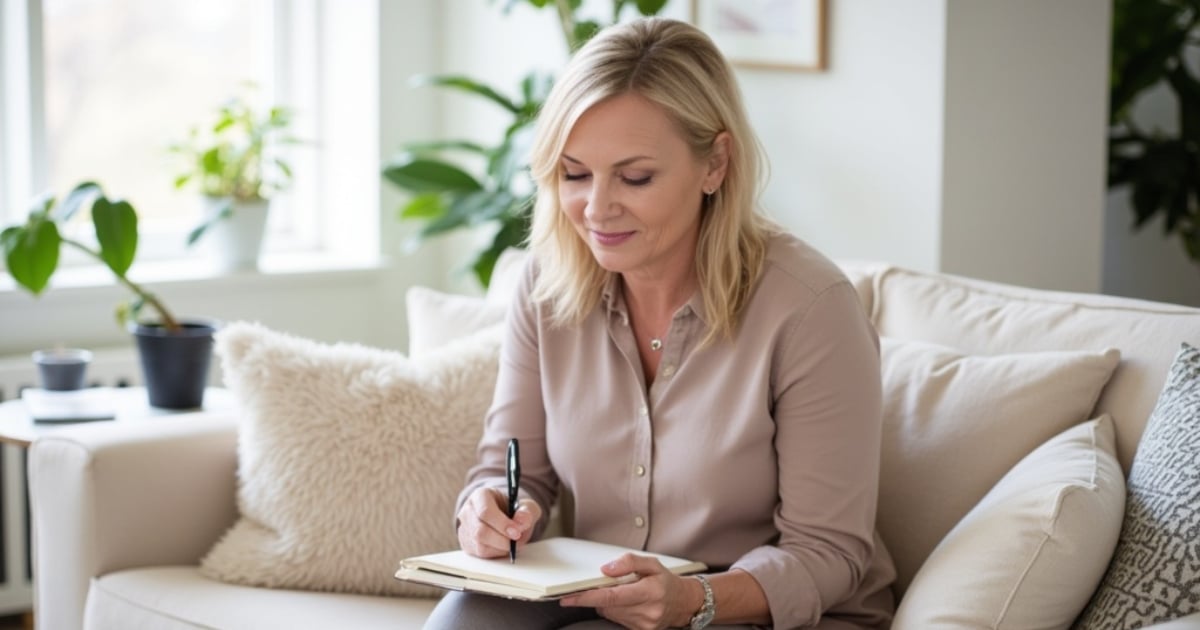
Writing has been one of my greatest lifelines during times of change and uncertainty.
Journaling gives your thoughts a safe place to land and allows you to process emotions that might otherwise stay stuck inside.
I write freely—without judgment—sometimes pouring out fears or frustrations, other times listing prayers, dreams, or even small wins.
There’s something powerful about getting it all out on paper. You don’t need to be a “writer” to do this—it’s for you, not for anyone else.
Prioritize Your Physical Health
When everything else feels chaotic, taking care of your body is an act of self-respect.
I’ve learned that even small things—like drinking more water, stretching in the morning, or choosing nourishing foods—make a big difference in how I feel emotionally.
- Gentle movement (like walking, yoga, or dancing in the living room!) helps release stress.
- Sleep is non-negotiable—create an environment that supports true rest.
- Don’t skip check-ups or ignore lingering health issues.
Your body is the vessel you walk through change in—treat it with kindness and consistency.
Know Your Mental and Emotional Limits (Protect Your Peace!)
In seasons of uncertainty, your peace is precious—so protect it. Pay attention to what you’re consuming and who you’re surrounding yourself with.
- Limit exposure to negativity, especially online or in the news.
- Unfollow or mute voices that bring comparison, fear, or pressure.
- Lean into community that lifts you up—whether that’s a friend, support group, church family, or online space filled with encouragement and truth.
Give yourself permission to create boundaries around what (and who) you allow into your mind and heart.
Get Outside and Connect with Nature
There’s nothing quite like the healing power of nature. When I feel anxious, stuck, or overwhelmed, stepping outside always helps.
Whether it’s a walk around the block, sitting in the sun, or gardening, being in creation reminds me that seasons come and go—and that I’m not alone in the process of growth and change.
Nature has a way of grounding us, slowing us down, and helping us reconnect with the bigger picture.

Explore New Routines, Hobbies, or Creative Outlets
Change can open up space for something new—but we have to be willing to try. Is there a hobby you’ve always wanted to explore? A creative project calling your name? A volunteer opportunity that lights you up?
Even something as simple as rearranging a room or trying a new recipe can spark joy and help you feel more engaged in your own life.
You don’t have to do something grand. Just try something different. Follow your curiosity and see where it leads.
Related: The Best Hobbies for Older Women
Deepen Your Faith and Trust in the Process
Finally—and most importantly—keep bringing your worries, hopes, and questions to God.
Trust doesn’t mean we never feel fear or uncertainty. It means we choose to lean in anyway, believing that we’re being guided even when the road ahead is unclear.
Daily prayer, scripture reading, worship music, and simply talking to God throughout the day have become anchors for me.
I don’t have to have it all figured out—and neither do you.

Faith and Trust in Seasons of Transition
One of the greatest gifts that has come with age and experience is a deeper, more grounded faith, which helps me to embrace change and uncertainty.
It’s not the kind of faith that always has answers or feels strong every day—but the kind that has been tested, refined, and proven true through life’s many ups and downs.
In seasons of transition—when the ground beneath me feels shaky—I come back to this unshakable truth:
God does not change.
His love, His presence, and His promises remain constant, even when everything else feels uncertain.
There’s something profoundly comforting about knowing that while life changes, God stays the same. That truth has become my anchor.
When I feel overwhelmed by the unknown, I remind myself of what I do know:
God is with me.
He sees the whole picture.
He’s working behind the scenes—even when I can’t see it yet.
Over the years, these scriptures have become lifelines—words I return to again and again when I need to realign my heart with truth:
2 Corinthians 4:16 – “Though outwardly we are wasting away, yet inwardly we are being renewed day by day.”
This verse has brought me peace in times when physical changes or life circumstances felt discouraging. God is doing a renewing work within us, even as everything else shifts around us.
Isaiah 43:19 – “See, I am doing a new thing! Now it springs up; do you not perceive it?”
This reminds me that God is always up to something—even in the waiting, even in the letting go.
Proverbs 3:5-6 – “Trust in the Lord with all your heart and lean not on your own understanding; in all your ways acknowledge Him, and He will direct your paths.”
When I don’t understand the why or the how, I lean on this promise. I don’t have to have it all figured out—He will lead me step by step.
Related Articles
- How to Handle a Midlife Crisis
- Finding Balance in Life After 50
- 100 Things Every Woman Should Own
- What to Do After a Midlife Crisis
- My Guide to Navigating Midlife Transition
- How to Make New Friends in Your 50s and Over!
- How to Reinvent Yourself After 50
- Midlife Crisis in Women and What to Do
- 10 Things to Do First Thing in the Morning
- Start a Morning Self-Care Routine in 15 Easy Steps
- The Best Hobbies for Older Women
- Take the Midlife Crisis Quiz
- Navigating an Empty Nest
FAQ: Embracing Change and Uncertainty Later in Life
Why is change harder as we get older?
I think change often feels harder later in life because we’re more rooted in routines, relationships, and a sense of identity.
How can I learn to accept change and uncertainty?
Start by acknowledging your feelings instead of resisting them. Practice journaling, lean on your faith, focus on what you can control, and surround yourself with encouraging, supportive people.
Shifting your mindset from fear to curiosity makes a big difference.
What are some positive aspects of change in midlife and beyond?
This season of life can lead to rediscovering passions, releasing what no longer serves you, and deepening your spiritual life.
How can I stay grounded when life feels uncertain?
I find that small daily practices make a significant difference, such as taking quiet time, walking outside, creating comforting routines, limiting negativity, and expressing gratitude.
Conclusion: Embracing Change and Uncertainty (Later in Life)
Change and uncertainty aren’t easy—but they aren’t your enemies either. They can be teachers, catalysts, and even gifts.
Midlife and beyond is not the time to shrink back—it’s the time to lean in, listen deeply, and trust that God is not finished with you yet.
You’re not alone in this journey. I’m walking it too. And I believe with all my heart that some of the best, most meaningful chapters of your life are still ahead.
XO, Christine

I’ve been keeping it real since 1963. 😊
I’m a child of God, devoted wife, proud mama and grandma, full-time creative, domestic engineer, and passionate self-care enthusiast.
I’m purpose-driven and do my best to live each day with intention—whether shopping for treasures, painting in my art studio, digging in the garden, or cooking up something yummy for my family.
I’m always up for a good chat and love collaborating with fellow creatives and brands.
Let’s connect—don’t be shy!