Unlock Creative Flow: Enhance Your Artistic Process Today
Have you ever lost track of time while making art, writing, or working on a passion project? That sweet spot where everything clicks, distractions fade, and you’re fully immersed in creating—that’s creative flow.
It’s not magic, though it feels like it. It’s a state of deep focus and joyful engagement that fuels productivity, originality, and fulfillment.
In this article, we’ll explore what creative flow is, how to invite more of it into your daily life, what gets in the way, and real-world tips to help you harness it regularly.
This post may contain affiliate links. Click to visit policies and disclosures
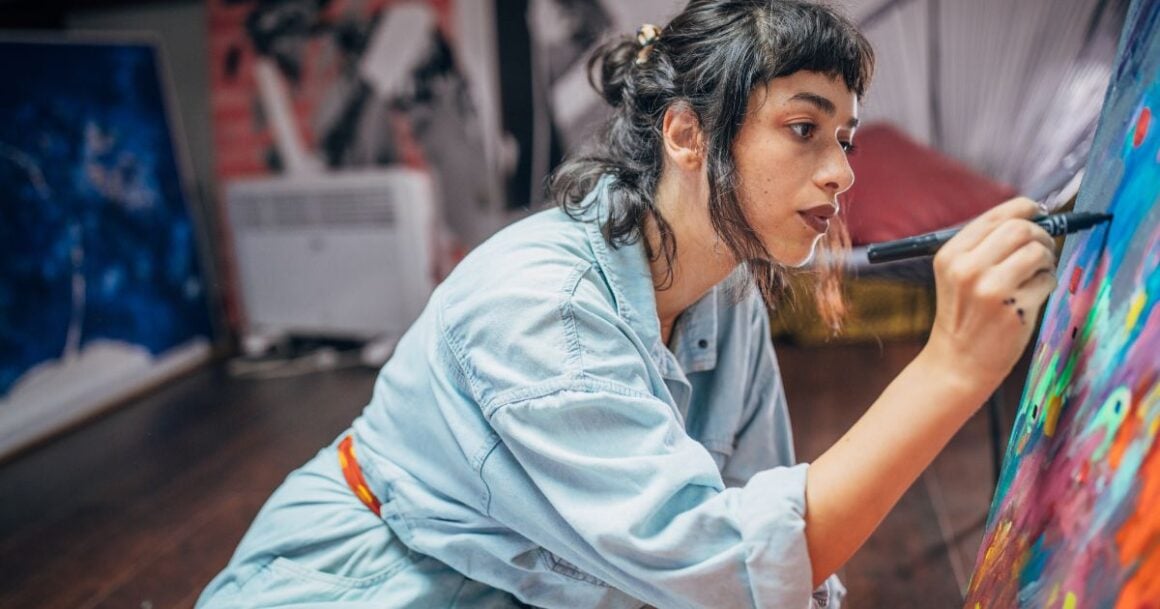
Finding Creative Flow: How to Tap Into Your Most Inspired State
What Is Creative Flow?
Creative flow is a mental state where you are completely absorbed in the task at hand.
Psychologist Mihaly Csikszentmihalyi, who coined the term “flow,” described it as “being completely involved in an activity for its own sake.”
When you’re in creative flow:
- Time seems to disappear
- You feel energized, focused, and motivated
- Ideas come more easily
- You’re not overthinking—you’re just doing
It’s the opposite of creative block. Instead of feeling stuck or uncertain, you’re moving in rhythm with your creativity.

What Blocks Creative Flow?
Before you can stay in creative flow, it helps to recognize what tends to pull you out of it. Many of us unconsciously sabotage our own momentum without realizing it. By identifying common creative flow blockers, you can take steps to minimize them.
Here are some of the biggest barriers to creative flow:
Perfectionism
If there’s one thing that’s stalled my creative flow more times than I’d like to admit—it’s perfectionism. Trying to make every line, brushstroke, or sentence flawless is like slamming on the brakes while trying to accelerate. It paralyzes progress and turns play into pressure.
I’ve spent years unlearning the belief that things have to be “just right” before they’re worth doing. As a recovering perfectionist, I’ve had to remind myself (sometimes daily) that creative flow isn’t about perfection—it’s about presence. The goal isn’t to create a masterpiece every time—it’s to stay in motion, explore freely, and allow yourself to create without judgment.
Here’s what I’ve learned through experience:
Flow loves freedom. When you release the need to control every outcome, your creativity can finally breathe.
Done is better than perfect. Waiting for the “right” idea or mood often means waiting forever.
Mistakes are part of the magic. Some of my favorite pieces started as “failures” I leaned into instead of scrapping.
Multitasking
I used to think multitasking was a sign of productivity—until I realized it was sabotaging my creative flow.
Jumping between tabs, checking emails mid-paint session, or flipping between projects left me feeling scattered and unsatisfied.
Creative flow thrives on presence.
When I finally committed to focusing on one task at a time—whether it was painting, journaling, or editing—everything changed. My work became deeper, more connected, and more joyful.
External Noise and Distractions
It’s hard to enter creative flow when your phone keeps buzzing or there’s clutter screaming at you from your desk.
I’ve learned the hard way that noise—both literal and visual—can completely pull you out of that dreamy, flow state.
My solution? I intentionally curate my environment before I begin. I clear the clutter, light a candle, put on a playlist that suits my mood, and silence notifications. (more on that later…)
If you’re struggling to focus, ask yourself: Is your space supporting or stalling your creativity?
Mental or Emotional Overload
Let’s be honest: you can’t access creative flow when your mind is spinning with stress.
I’ve hit creative walls simply because I was too emotionally drained or mentally overloaded to tap into anything playful or inspired.
When that happens, I don’t force it.
I ground myself with deep breathing, drink water, or step outside barefoot to reconnect. Sometimes I’ll pray, journal, or just take a short nap—whatever my nervous system needs to reset. (again, more on this to come…)
Protecting your peace isn’t just self-care—it’s essential for sustaining creative energy.

What Can Help You Get Into Creative Flow?
You can’t force creative flow—but you can absolutely invite it. This inspired
state tends to show up when your mind, body, and environment align in a way that encourages deep focus and free expression.
If you’ve ever wondered why some days you feel “in the zone” and others feel like a creative slog, it often comes down to setting the right conditions.
Here are some of the most effective ways to cultivate creative flow:
Care for Your Physical Body
Your creative mind needs a well-regulated body to do its best work. Prepare your body and mind for creative flow by:
- Staying hydrated and nourished
- Doing a quick stretch or body scan
- Taking a few deep grounding breaths
- Meditating or journaling to clear mental clutter
Keep It Positive: Protect Your Creative Energy
Creative flow doesn’t just come from tools and techniques—it also depends on your internal environment.
Your mind, heart, and spirit need room to breathe, so it’s essential to guard them from negativity that can disrupt your flow.
Think of it this way: Garbage in, garbage out.
If you’re constantly taking in stress, drama, or toxic input, it’s going to cloud your creative channel.
Here are some ways to protect your space—both inner and outer—to support a state of creative flow:
- Avoid toxic people – Energy is contagious. Surround yourself with those who uplift, not drain you.
- Take a break from the news and social media – A constant stream of negativity can block your imagination and dim your spirit.
- Clear your workspace of negative energy – Use sage, essential oils, a prayer, or simply intention to reset your space.
- Open the windows – Let in natural light and fresh air. A breeze can literally change the energy in the room.
- Declutter regularly – A cluttered environment can reflect (and reinforce) a cluttered mind. Keep your studio or workspace peaceful and inspiring.
- Stay mindful of what you consume – Choose music, books, podcasts, and shows that feed your creativity and align with your values.
Ground Yourself
Grounding helps you reconnect to your body, quiet mental chatter, and become more present—an ideal state for creative flow.
Here are simple ways to ground before or during your creative time:
- Walk barefoot outside and feel the earth under your feet
- Use a grounding mat while sitting or standing at your workspace
- Try deep breathing (4-4-4 breath) or a short body scan meditation
- Do gentle movement like stretching, yoga, or mindful swaying
Set Your Intentions
Creative flow thrives when there’s a sense of purpose behind what you’re doing—even if it’s loose or playful. Instead of diving in aimlessly, take a moment to set an intention for your creative time.
- Why am I creating today?
- What do I want to express or explore?
- How do I want to feel during this process?
Intentions help guide your energy and attention, reduce overwhelm, and make it easier to enter that immersive state of creative flow.
Whether it’s “Today I just want to play with color” or “I’m here to release stress,” reconnecting with your why gives your creativity direction and meaning.
Use Music to Set the Tone
Music can help guide you into the emotional frequency of creative flow. Choose playlists that match the mood you want to channel—peaceful, dreamy, moody, energized, or bold. I prefer:
- Instrumental or ambient soundscapes
- Lo-fi beats or acoustic guitar
- Nature sounds like rain or ocean waves
Sound bypasses your inner critic and draws you deeper into the process. (Check out my Spotify playlist guide for studio music for inspiration.)
Warm Up Before You Dive In
Creative flow doesn’t usually strike the second you sit down—it builds momentum. Before jumping into your “real” project, take a few minutes to loosen up creatively. Here are some simple warm-up ideas:
- Scribble or sketch random shapes
- Swatch out colors or textures
- Do a one-minute stream-of-consciousness journaling exercise
- Try a fun creative prompt from a prompt jar
- Paint or draw using your non-dominant hand
Warming up shakes off hesitation and perfectionism—and gives your brain permission to play, which is where flow begins.

Stay Present and Let Go of the Outcome
One of the biggest killers of creative flow is attachment to results. When you’re overly focused on how something should look or turn out, it pulls you out of the present moment and into your head.
Instead, ask yourself:
- “What would feel good to do next?”
- “What’s one thing I can play with right now?”
- “What if this didn’t have to be perfect—just honest?”
Flow happens when we fully engage with what’s happening now—not what we expect it to become.
Signs You’re in a State of Creative Flow
Wondering if you’ve tapped into a true creative flow state? It’s one of those magical, immersive experiences that can sneak up on you.
Here are some clear signs you’re in the zone:
- You lose track of time – Minutes turn into hours, and you’re shocked when you finally look at the clock.
- You forget to check your phone – Distractions fade into the background, and you’re fully absorbed in the process.
- You feel deeply engaged and focused – Your mind isn’t jumping around. You’re completely tuned in to the task at hand.
- Self-doubt takes a backseat – You’re not second-guessing every move. Instead, you’re trusting your instincts and letting creativity lead.
- You feel fulfilled—even if the work isn’t finished – The act of creating is enough. It’s not about perfection; it’s about presence.
- You leave feeling energized, not depleted – Instead of feeling drained, you’re more alive, inspired, and connected to yourself.
Resources to Learn More About Creative Flow
Here are a few books that dive deeper into the science and spirit of flow:
Flow: The Psychology of Optimal Experience” by Mihaly Csikszentmihalyi
The foundational book on flow theory and how to apply it to creative and everyday life.
“Big Magic” by Elizabeth Gilbert
A creative manifesto that celebrates curiosity, fearlessness, and tapping into your inner magic.
“The War of Art” by Steven Pressfield
A sharp look at resistance, discipline, and what it takes to stay in motion creatively.
“Stealing Fire” by Steven Kotler & Jamie Wheal
A more intense dive into altered states, flow, and high-performance creativity.
Frequently Asked Questions About Creative Flow
What is creative flow?
Creative flow is a mental state where you’re fully immersed in a creative task. Time seems to disappear, distractions fade, and ideas come more easily. It’s when you’re most connected, focused, and creatively alive.
How do I know if I’m in creative flow?
Signs of creative flow include losing track of time, feeling energized while working, and not second-guessing yourself. You’re deeply focused, and the process feels enjoyable—even if it’s challenging.
Why can’t I get into creative flow?
Common blocks to creative flow include distractions, perfectionism, fear of failure, multitasking, and mental or physical fatigue. Creating a dedicated, distraction-free space and setting a clear intention can help.
How can I get into a flow state more often?
To enter creative flow more consistently, try setting small goals, minimizing distractions, doing warm-up exercises, and using rituals (like music or meditation) to get in the zone. The more often you practice, the easier it becomes to access flow.
Does music help with creative flow?
Yes! Many creatives use instrumental or ambient music to encourage focus and flow. Music can set the mood, calm the nervous system, and keep the inner critic quiet while you create.
Can meditation help me reach creative flow?
Absolutely. Meditation, breathwork, or grounding exercises calm your mind and body, making it easier to enter a flow state. Even five minutes of mindfulness before creating can improve focus and creative connection.
What’s the difference between creative flow and productivity?
Productivity is about output and results, while creative flow is about presence and process. Flow often leads to productivity—but its power lies in how it feels: energizing, joyful, and creatively fulfilling.
Related Articles
- 100 Positive Morning Affirmations
- Finding Work-Life Balance
- Breaking Free of Perfection
- Overcoming Perfectionism as an Artist
- Why Perfection Does not Measure Worth
- How to Beat a Creative Block
- Best Books for Over-Thinkers
- 100+ Affirmations for Self-Love
- Developing Healthy Boundaries for Women
- How to Reinvent Yourself at 50 and Beyond
- Best Inspirational Books for Women
- Best Books about Purpose
Final Thoughts: Finding a Creative Flow
Creative flow isn’t reserved for artists in studios or writers in cabins—it’s available to anyone who wants to feel fully engaged, present, and connected to what they’re doing.
Whether you’re painting, journaling, organizing your space, or simply solving a problem in a new way, flow is that beautiful moment when time disappears and your soul feels aligned with the work in front of you.
The truth is, you can’t force creative flow (God knows I’ve tried)—but you can make space for it.
By creating supportive rituals, removing distractions, grounding your energy, and letting go of perfection, you set the stage for creativity to show up.
It’s not about waiting for inspiration to strike—it’s about showing up with an open heart and allowing the process to unfold.
Trust yourself. Keep showing up. And remember: sometimes the only thing standing between you and flow… is starting.
XO, Christine

I’ve been keeping it real since 1963. 😊
I’m a child of God, devoted wife, proud mama and grandma, full-time creative, domestic engineer, and passionate self-care enthusiast.
I’m purpose-driven and do my best to live each day with intention—whether shopping for treasures, painting in my art studio, digging in the garden, or cooking up something yummy for my family.
I’m always up for a good chat and love collaborating with fellow creatives and brands.
Let’s connect—don’t be shy!