12 Warning Signs You’re Ignoring Your Intuition + What to Do
You know that feeling when you meet someone new and something just feels… off? But you can’t put your finger on exactly what it is, so you brush it aside and tell yourself you’re being silly.
Or maybe you’ve had moments where you knew you should speak up in a meeting, but you stayed quiet instead. Later, someone else said exactly what you were thinking, and you kicked yourself for not trusting that inner nudge.
These might be signs you’re ignoring your intuition.
We’ve all been there, friend. That quiet voice inside—the one that seems to know things before our logical brain catches up—gets drowned out by the noise of everyday life.
We’re so busy analyzing, planning, and trying to make the “right” choices that we forget we already have an incredible guidance system built right in.
If you’ve been feeling stuck, anxious, or like you’re living someone else’s life, there’s a good chance you’ve been ignoring some pretty important signals.
Let’s explore the signs that you might be ignoring your intuition—and more importantly, how to find your way back.
This post may contain affiliate links. Click to visit policies and disclosures

What Exactly Is Intuition, Anyway?
Before we dive into the signs you might be ignoring your intuition, let’s get clear on what we’re actually talking about.
Because if you’re like most people, you’ve probably heard the word “intuition” thrown around a lot without anyone really explaining what it means.
Intuition isn’t some woo-woo magical power (though it can feel pretty amazing when you start using it). It’s actually your brain’s incredibly sophisticated way of processing information that you’re not consciously aware of.
Think of it as your internal computer running background programs—it’s constantly taking in subtle cues from your environment, your body, your past experiences, and your emotions, then synthesizing all of that into a “knowing” or feeling.
You know how sometimes you meet someone and instantly get a good or bad vibe, even though you can’t pinpoint exactly why?
That’s your intuition at work.
Your brain has picked up on micro-expressions, body language, tone of voice, and energy patterns that your conscious mind didn’t register.
Still, your intuitive mind processed and translated it into a feeling.
Your intuition shows up in different ways:
- Gut feelings – that literal sensation in your stomach when something feels right or wrong
- Sudden knowing – when you just “know” something without being able to explain how
- Physical sensations – tension, lightness, energy, or unease in response to situations
- First impressions – those immediate reactions before your analytical mind kicks in
- Dreams and imagery – symbolic information that comes through when your logical mind is quiet
The reason so many of us struggle to trust our intuition is that we live in a culture that values logic and proof above all else.
We’re taught that if we can’t explain something rationally, it must not be valid.
However, what’s remarkable is that research indicates our unconscious mind processes approximately 11 million bits of information per second, whereas our conscious mind can only handle around 40.
That means there’s a whole lot of intelligence happening below the surface that never makes it to our awareness—unless we know how to listen for it.
Your intuition isn’t trying to replace logical thinking—it’s designed to work alongside it.
When both are functioning well together, you make decisions that are not only smart but also aligned with who you really are and what you actually need.

12 Warning Signs You’re Ignoring Your Intuition
Overthinking Every Single Decision
Let’s be real: overthinking can feel like a full-time job. You make pros and cons lists for everything from choosing a restaurant to deciding whether to text that person back.
You go back and forth until your brain feels like it’s running on a hamster wheel, and somehow you end up more confused than when you started.
Sound familiar?
Here’s what’s really happening: when you’re disconnected from your intuition, your mind tries to compensate by working overtime.
It’s like trying to solve a puzzle with half the pieces missing—you’re gathering all this information but missing the most important piece: what actually feels right for you.
I used to be the queen of overthinking. I’d research restaurants for an hour before going out to dinner (seriously).
But I noticed something interesting: the times I made quick, gut-level decisions usually turned out better than my carefully analyzed choices.
That’s because intuition bypasses all the mental noise and cuts straight to what you actually need.
When you’re in alignment with your inner knowing, decisions feel clearer—not necessarily easier, but clearer. There’s less of that exhausting back-and-forth because you’re tapped into something deeper than just your thinking mind.

Constantly Regretting Your Choices
If you find yourself thinking “I knew I shouldn’t have done that” or “Something felt off, but I didn’t listen” more often than you’d like to admit, you’re definitely not alone.
That sinking feeling of regret? It’s usually your soul saying, “Hey, remember when I tried to tell you that wasn’t the right move?”
We’ve all had those moments where our gut tells us something isn’t quite right, but we go ahead anyway. Maybe we don’t want to disappoint someone, or we think we’re being too sensitive, or we let logic override that subtle feeling.
Then later—sometimes much later—we realize our instincts were spot on.
I remember staying in a job that made me miserable for way longer than I should have. Every Sunday night, I’d get this heavy feeling in my chest, but I kept telling myself I was being dramatic. (And, I needed the money)
It wasn’t until I finally listened to that feeling and made a change that I realized how much energy I’d been wasting trying to convince myself everything was fine.
Regret isn’t just painful—it’s information. It’s your inner wisdom saying, “This is what happens when we don’t work together.”
And while you can’t change the past, you can use those experiences to build a stronger relationship with your intuition going forward.

Ignoring What Your Body Is Telling You
Your body is constantly sending you messages, but somewhere along the way, many of us learned to tune them out. That tightness in your chest when you’re about to agree to something you don’t want to do?
The knot in your stomach when you’re around certain people? The way your shoulders tense up in specific environments? These aren’t random physical quirks—they’re your intuition speaking through your body.
Your gut feelings are literally that—feelings in your gut (and chest, and throat, and everywhere else).
When something doesn’t align with your truth, your body often knows before your mind does. But we’re so good at rationalizing these sensations away: “It’s just stress,” “I’m being too sensitive,” “I’m overthinking it.”
Here’s what I’ve learned: when you ignore these signals long enough, your body starts to speak louder.
Chronic fatigue, tension headaches, anxiety, digestive issues—sometimes these are your body’s way of saying, “You’re not listening to the whispers, so here’s a shout.”
I’m not saying every physical symptom is your intuition (definitely check with healthcare professionals for persistent issues), but there’s often a connection between living out of alignment and feeling physically off.

Feeling Anxious and Emotionally Drained
Ever notice how some days you wake up already feeling exhausted, even after a full night’s sleep? Or how you can spend time with certain people or in certain situations and feel completely wiped out afterward?
When you’re consistently living out of alignment with your inner truth, it’s like having a low-grade fever—everything requires more energy than it should.
Anxiety isn’t always the obvious panic attack kind (though it can be). Sometimes it’s that quiet dread you feel on Sunday nights, or the sense that you’re going through the motions of a life that doesn’t quite fit.
You might look successful on paper, but feel empty inside.
Here’s something that might surprise you: Anxiety is often your soul’s way of getting your attention. It’s like an internal alarm system saying, “Something needs to change here.”
When you start making choices that honor your truth instead of just meeting everyone else’s expectations, that emotional weight begins to lift.
I spent years feeling anxious about things that, looking back, were pretty clear signals that I was ignoring my intuition.
The job that looked perfect but felt wrong, the relationship that checked all the boxes but left me feeling lonely, the social commitments that drained me even though I “should” have enjoyed them.
Your emotional state is one of your clearest indicators of how in tune you are with your inner knowing.
If you’re feeling constantly tense, sad, or exhausted, it might be time to ask: “What am I not listening to?”

Losing Confidence in Yourself
Remember when you were younger and making decisions felt more natural? You knew what you liked, what you didn’t, and you weren’t afraid to say so.
But somewhere along the way, that clarity got cloudy. Now you constantly second-guess yourself, wondering if you can even trust your judgment anymore.
This loss of self-confidence isn’t just about getting older or having more responsibilities—it’s often a sign that you’ve been disconnecting from your inner voice for too long. When you consistently ignore your intuition, you start to lose faith in your ability to navigate life.
It’s like being in an emotionally abusive relationship with yourself.

Having Trouble Trusting Others
When you stop trusting yourself, it becomes harder to trust others as well.
You might find yourself constantly analyzing whether someone is being genuine, replaying interactions to figure out hidden meanings, or feeling suspicious of people’s motives even when there’s no real reason to be.
This isn’t about being naive or ignoring red flags—intuition helps you spot genuinely problematic people.
But when you’re disconnected from your inner knowing, you lose the ability to distinguish between valid concerns and anxiety-driven paranoia.
I went through a phase where I questioned everyone’s intentions because I’d stopped trusting my own ability to read situations.
It was exhausting and lonely. But as I started honoring my gut feelings again—even about small things—I began to trust my judgment about people, too. 🙂
Truth Bomb: We’ve Been Conditioned to Distrust Our Intuition.
Let’s talk about something that doesn’t get discussed enough: how much we’re taught to distrust our own inner knowing.
From an early age, we learn to value external achievements over internal alignment, logic over intuition, and the approval of others over our own truth.
We’re taught that if we can’t prove something or explain it rationally, it’s not valid.
So when your intuition speaks up with a feeling or hunch that doesn’t make logical sense, you dismiss it.
What if people think you’re being dramatic? What if you’re wrong? What if you disappoint someone?
This fear of judgment doesn’t just silence your intuition—it suffocates it.
We become so focused on appearing put-together and making the “smart” choice that we forget to ask the most important question: “What feels true to me?”
I spent years making decisions based on what I thought I should do rather than what I actually wanted to do.
Career moves that looked good on paper but left me feeling empty. Relationships that made sense to everyone else but didn’t light me up. Social commitments that I agreed to because I didn’t want to seem antisocial.
Living your life based on others’ expectations is like wearing a costume that never quite fits.
It might keep you “safe” from judgment, but it keeps you stuck in a life that isn’t really yours.

How to Start Listening to Your Intuition (and trust it!)
How to Reconnect: Creating Space for Stillness
If you want to hear your intuition clearly, you need to give it space to speak. This doesn’t mean you need to meditate for hours or go on silent retreats (though if that calls to you, go for it).
It means creating small pockets of quiet in your day where you can tune in to yourself.
Your intuition is always there, but it speaks in whispers, not shouts. When your mind is constantly busy—scrolling, consuming content, rushing from one thing to the next—those subtle signals get drowned out.
Simple ways to create stillness:
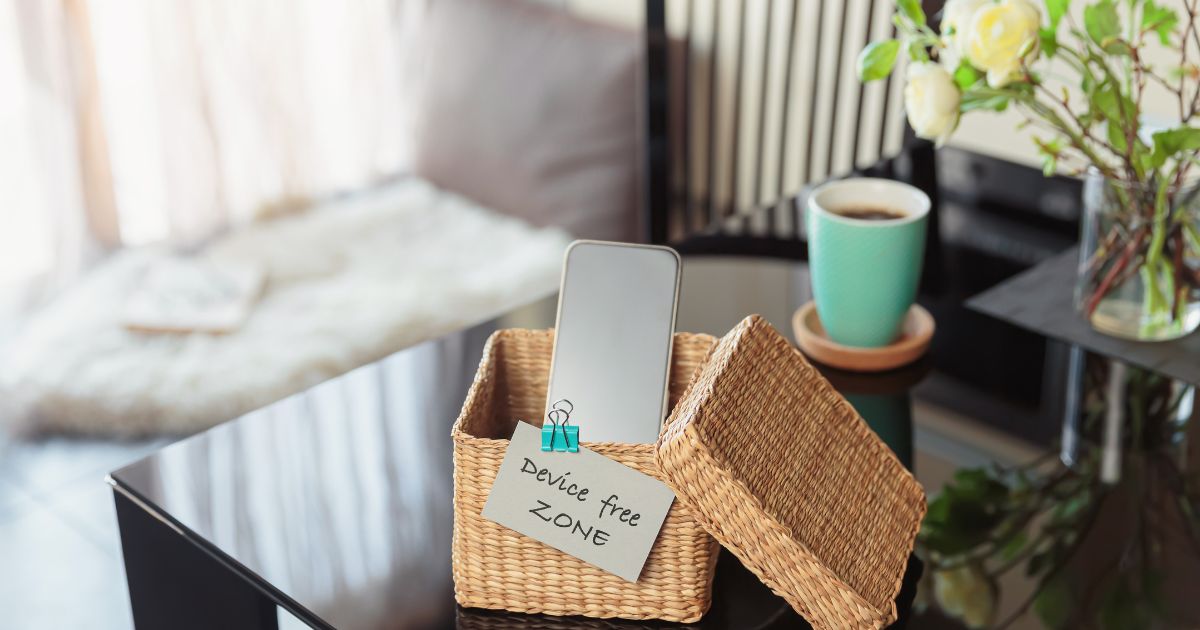
- Start your morning with five minutes of quiet breathing before checking your phone
- Take a walk without podcasts or music sometimes
- Ask yourself how you’re feeling before making decisions, big or small
- End your day by reflecting on moments when you felt aligned vs. off
- Consider unplugging more often. A Digital Detox can do wonders
Want to hear something crazy? I used to be afraid of quiet time because I thought it meant I wasn’t being productive.
Thankfully, I’ve learned that those moments of stillness are some of the most productive parts of my day—they help me make better decisions, stay aligned with my values, and avoid the exhaustion that comes from constantly second-guessing myself.

Use Creativity to Strengthen Your Intuition
Here’s something that might surprise you: your intuition thrives when you’re creating.
Whether you’re writing, painting, cooking, gardening, or even organizing your closet, creative activities tap into the same part of your brain that processes intuitive information. It’s true!
Creativity is intuitive by nature—there’s no “right” or “wrong,” only expression.
When you create without judgment, you strengthen your connection to your inner knowing or intuition.
You don’t have to be artistic to benefit from this.
Maybe it’s journaling without editing yourself, doodling during phone calls, or rearranging your living space until it feels right.
The key is to do something that allows you to bypass your analytical mind and tap into a
state of flow.

Learning Your Body’s Language
One of the biggest shifts in living more intuitively is realizing that your body is constantly giving you information. Your mind might be confused, but your body usually knows.
That flutter of excitement when someone mentions an opportunity? That’s a yes. The way your shoulders tense when you think about a certain commitment? That’s important information.
The energy drain you feel around specific people? Your body is telling you something your mind might be rationalizing away.
Most of us were taught to override our physical signals—push through exhaustion, ignore discomfort, power through when our energy is low.
But your body holds wisdom that your thinking mind doesn’t have access to.

Finding Balance Between Logic and Intuition
Let me be clear about something: listening to your intuition doesn’t mean disregarding logic.
It’s not about making impulsive decisions or ignoring practical considerations. It’s about using both your analytical mind and your inner wisdom to make choices that serve you.
Think of logic as your GPS and intuition as your compass. The GPS gives you directions and helps you plan the route, but the compass keeps you oriented toward your true north.
You need both to navigate well.
The problem happens when we rely so heavily on logic that we ignore the compass completely. We demand proof for everything, even our deepest truths.
But not everything that matters can be measured or explained rationally.
How to use both logic and intuition:
- Use logic to gather information and consider practical implications
- Use intuition to sense whether something aligns with your values and desires
- When you feel conflicted, ask: “What would serve the highest good here?”
- Trust your gut about people and situations, then use logic to figure out next steps
Related Self-Care Articles
- How to Develop a Growth Mindset
- The Best Books for Overthinkers
- How to Set Boundaries in Toxic Relationships
- Self Concept vs Self Esteem
- Life Skills That Every Woman Should Know
- Overcoming Perfectionism and People Pleasing
- How to Reinvent Yourself
- Best Books About Purpose
- The Self-Care Alphabet
- Why Perfectionism and Creativity Don’t Gel
- How to Start a Self-Care Routine
- How to Build Self-Esteem
- How to Overcome Perfectionism as an Artist
- Great Inspirational Books for Women
- Discover the Benefits of Spiritual Self-Care
Conclusion: Signs You’re ignoring Your Intuition
If you’ve made it this far, you probably recognize these signs you’re ignoring your intuition in your own life. The overthinking, the regret, the gut feelings you’ve dismissed—they’re all your inner wisdom trying to get your attention.
Here’s what I want you to know: recognizing these signs isn’t a failing—it’s the first step toward trusting your intuition again. Every time you’ve ignored those body sensations or second-guessed yourself, your inner guidance was still there, patiently waiting.
Learning to trust your intuition isn’t about mystical experiences—it’s a practical skill that helps you make better decisions and create a life that actually fits who you are. You already have everything you need.
So start today. Create moments of stillness. Pay attention to your gut feelings and how your body responds to different situations. Notice your first instincts before your mind starts analyzing.
Your inner wisdom knows the way, and it’s been waiting for you to listen. The more you practice tuning in to your intuition, the clearer that guidance becomes.
Trust yourself. You’ve got this. You always have.
XO, Christine

I’ve been keeping it real since 1963. 😊
I’m a child of God, devoted wife, proud mama and grandma, full-time creative, domestic engineer, and passionate self-care enthusiast.
I’m purpose-driven and do my best to live each day with intention—whether shopping for treasures, painting in my art studio, digging in the garden, or cooking up something yummy for my family.
I’m always up for a good chat and love collaborating with fellow creatives and brands.
Let’s connect—don’t be shy!
FAQs: Signs You’re Ignoring Your Intuition
How do I know if it’s fear or intuition?
Great question! Fear tends to be loud, panicky, and often focused on worst-case scenarios.
It feels urgent and dramatic. Intuition, on the other hand, is usually calm and clear—more like a gentle knowing than an alarm bell.
Fear says, “What if everything goes wrong?” while intuition says, “This doesn’t feel right for you.”
Can anyone develop their intuition, or is it a special gift?
Everyone has intuition—it’s not a mystical superpower, it’s part of being human.
Like any skill, some people might seem naturally more in tune with theirs, but anyone can strengthen their connection to their inner knowing with practice and attention.
What if my intuition is wrong?
Here’s the thing: even when your intuition leads you down a challenging path, it often brings you exactly where you need to be for your growth. And as you practice listening to it, you’ll get better at distinguishing between genuine inner guidance and fear-based reactions.
How long does it take to rebuild trust in your intuition?
This varies for everyone, but many people start noticing small shifts within a few weeks of paying attention.
The key is consistency—regularly checking in with yourself and honoring those inner nudges, even about small things.