Stop Fine Hair From Getting Greasy So Fast: 7 Easy Tips
Want to stop fine hair from getting greasy so fast? As a former hairstylist with fine hair myself, I’ve cracked the code on this frustrating problem.
Fine hair tends to show greasiness faster than other hair types, and trust me – I’ve been there. That 2 PM look in the mirror when your hair already looks like you haven’t washed it in days?
I totally get it.
After years spent behind the salon chair, working with countless clients who struggled with the same issue, and my daily battles with oily roots, I’ve come up with these 7 game-changing tips that work.
Most people are fighting their hair type instead of working with it.
If your fine hair looks greasy by the end of the day, you’re definitely not alone – and the good news is, you can absolutely stop fine hair from getting greasy so fast once you understand what causes greasy hair and how your specific hair type affects oil production.
This post may contain affiliate links. Click to visit policies and disclosures

Shop Products for Fine Hair
Why Does Fine Hair Get Greasy So Fast? Understanding the Root Causes
The Science Behind Sebaceous Glands and Oil Production
Here’s what’s actually happening on your scalp: your sebaceous glands produce natural oils (sebum) to keep your hair healthy – that’s completely normal and necessary.
The problem isn’t that you’re producing too much oil; it’s that fine hair can’t handle it the same way thick hair does.
Think of it like this: if you pour the same amount of oil on a thin piece of paper versus a thick towel, which one will look more saturated? The thin paper, every time.
That’s exactly what’s happening with your fine hair. It has less surface area to distribute those natural oils, so the greasiness becomes visible much faster.
But here’s where it gets even trickier (and trust me, as a blonde with fine hair, I know this struggle intimately): fine hair tends to lie flatter against your scalp, which means those natural oils coat each strand more quickly.
The smaller diameter of each hair strand means there’s literally less “space” for oils to spread out, so they concentrate right at your roots, where everyone can see them.

How to Stop Your Fine Hair From Getting Greasy So Fast
7 Game-Changing Tips to Keep Your Fine Hair Fresh Longer
1. Nail Your Hair Washing Routine (Yes, Technique Matters!)
Forget what you’ve heard about “training your hair” to go longer between washes. That advice? Not meant for us fine-haired folks.
If your scalp is producing excess oil and your hair looks greasy by midday, you need to wash it—whether that’s daily or every other day.
I tried the whole “skip wash days to balance oil production” thing for months. Spoiler alert: my hair just stayed greasy longer. Listen to your scalp, not outdated hair myths.
The double-cleanse method for stubborn oiliness:
This technique was my secret weapon in the salon, especially for clients with particularly oily scalps or those using heavy styling products.
- First wash: Removes surface dirt, styling product buildup, and environmental gunk. You’ll notice it barely lathers—that’s normal!
- Second wash: Deep-cleans your scalp and hair follicles. This is where you get that satisfying, sudsy lather that means your hair is actually getting clean.
Pro tip: Focus your shampooing on your scalp, not your hair length. Your scalp is where oil production happens. The ends of your hair will get clean from the shampoo rinsing through—they don’t need aggressive scrubbing.

2. Choose the Right Hair Products (This Is Make-or-Break)
When you’re dealing with fine hair and oily roots, your product selection can either save you or sabotage you. Here’s what actually works:
Go silicone-free whenever possible:
Many drugstore shampoos and conditioners are loaded with silicones that create a coating on your hair strands. While this may initially make your hair feel smooth, it leads to faster product buildup and greasiness—especially on fine, thin hair.
Check ingredient labels for words ending in “-cone” (e.g., dimethicone, cyclomethicone) and opt for silicone-free formulas instead.
Use a clarifying shampoo weekly:
Fine hair accumulates oil, hard water minerals, and product residue faster than thick hair.
Once a week, use a clarifying shampoo to deep-clean your scalp, remove buildup from dry shampoos and styling products, and reset your hair. It’s like hitting the refresh button on your scalp health.
Switch to a volumizing shampoo for regular washes:
Volumizing shampoos are specifically formulated for fine, limp hair. They’re lightweight, contain fewer heavy moisturizers, and help create lift at the roots.
This keeps your hair feeling fresh and full of life without the heavy, greasy feeling that comes from hydrating or moisturizing formulas.
Steer clear of anything labeled “moisturizing” or “for dry, damaged hair”:
Those rich, creamy formulas? They’re designed for coarse, thirsty hair types—not fine strands that get oily by noon. They’ll weigh down your hair, make your roots look flat and greasy, and send you running for the dry shampoo way too soon.
Apply lightweight conditioner to ends only:
Your scalp is already producing natural oils. Adding conditioner to your roots is like adding fuel to the fire.
Apply a lightweight or volumizing conditioner only to your mid-lengths and ends—nowhere near your scalp. This keeps your hair soft and manageable without contributing to oily roots.
Avoid heavy styling products:
Thick hair creams, oils, and silicone-based serums will turn your fine hair into a greasy mess.
Instead, opt for lightweight, water-based styling products, root-lifting sprays, or volumizing mousses that add body without buildup.
3. Master the Art of Strategic Dry Shampoo Application
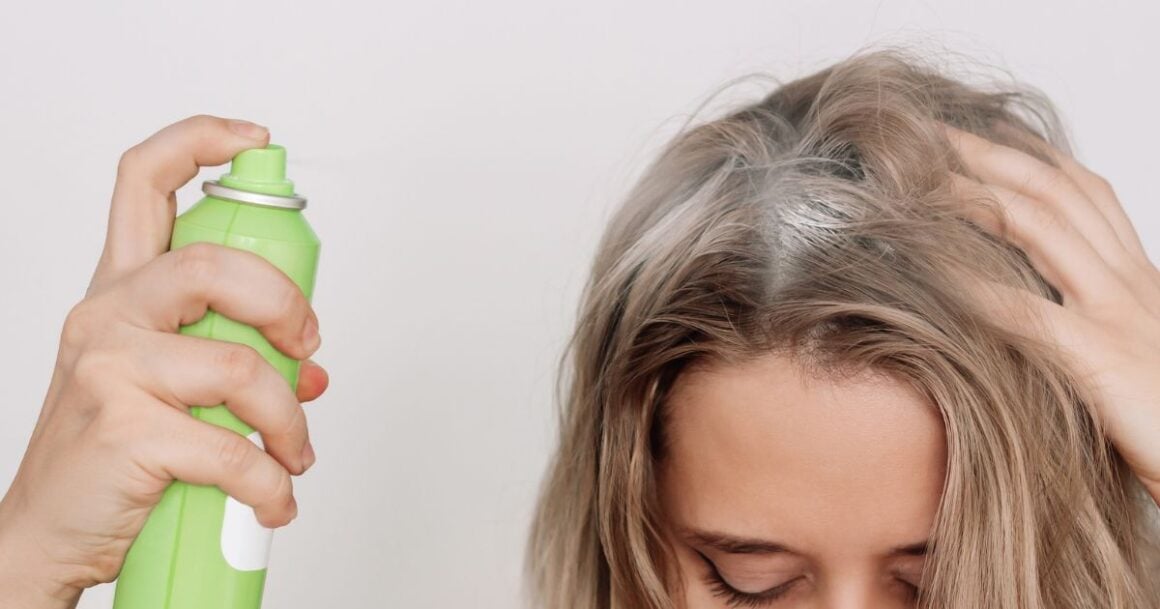
Okay, this tip literally changed my life—and I’m not being dramatic. Most people think dry shampoo is just for second or third-day hair when things are already looking rough. Wrong!
The secret? Apply dry shampoo to clean hair before bed.
I know it sounds counterintuitive, but hear me out. When you use dry shampoo preventatively on freshly washed hair at night, it absorbs oil as it’s being produced while you sleep. By morning, your roots still feel fresh and clean, and you’ve basically stolen an extra day before your next wash.
How to use dry shampoo on greasy hair like a pro:
- Shake the bottle well and hold it 6-8 inches from your scalp
- Apply to your roots in sections, focusing on your hairline, crown, and part
- Let it sit for 2-3 minutes to absorb oil
- Here’s the game-changer: brush it through with a soft-bristle brush or Wet Brush
Brushing after you apply dry shampoo helps distribute the product evenly across your scalp, boosts absorption, prevents that dreaded white cast, and creates natural-looking volume. Don’t skip this step!
Choose the right dry shampoo for your hair color:
If you have dark brown or black hair, use a tinted dry shampoo to avoid looking like you stuck your head in a bag of flour.
4. Stop Over-Brushing Your Hair (This One Hurt My Feelings)
I used to brush my hair constantly throughout the day—it felt so good! Turns out, I was making my grease problem so much worse.
Here’s why: every time you brush your hair, you’re stimulating your scalp and sebaceous glands, which encourages more oil production.
Plus, brushing physically distributes those scalp oils down your hair shaft—which is great if you have thick, dry hair that needs the moisture, but terrible if you have fine hair that already shows every drop of oil.
How to brush smarter (not more):
- Limit brushing to 2-3 times per day: once in the morning, once before bed, and maybe once mid-day if you’re using dry shampoo
- Use a boar bristle brush or a mixed-bristle brush—these gently distribute natural oils without overstimulating your scalp
- Avoid aggressive brushing or constantly running your fingers through your hair
- After applying dry shampoo, do a quick brush-through to distribute it evenly
Less brushing = less oil distribution = fresher-looking hair for longer. It’s simple math.

5. Wash Your Hair the Right Temperature
Hot water feels amazing, but it’s doing your oily scalp zero favors. High water temperatures stimulate your sebaceous glands to produce more sebum, resulting in increased oil production.
Hot water also strips your hair of its natural moisture, which can actually trigger your scalp to overproduce oil in an attempt to compensate.
The better approach:
- Wash your hair with lukewarm or cool water
- If you can’t resist a hot shower, rinse your hair with cool water at the end to close your hair cuticles and minimize oil production
- Your scalp (and your hair texture) will thank you
6. Check Your Hands, Hair Accessories, and Pillowcase
Sometimes the problem isn’t your hair—it’s what’s touching it.
Stop touching your hair:
Every time you run your fingers through your hair, you’re transferring oils from your hands directly to your strands. If you wear makeup, you’re also adding product residue. It’s a habit that’s hard to break, but it makes a massive difference.
Clean your hair accessories regularly:
Hair ties, headbands, brushes, and combs accumulate oil, product buildup, and dead skin cells. Wash them weekly with shampoo and warm water to keep them from redepositing gunk back into your clean hair.
Switch to a silk or satin pillowcase:
Cotton pillowcases absorb your hair’s natural moisture and can transfer oils from your skin back onto your hair while you sleep. Silk or satin pillowcases are gentler on your hair strands, reduce friction and breakage, and help maintain your hairstyle and freshness overnight.
7. Consider Internal Factors Affecting Your Oil Production
Sometimes, the issue isn’t just about your hair care routine—it’s about what’s happening inside your body.
Hormones play a huge role:
Hormonal changes during puberty, pregnancy, menstruation, or menopause can trigger increased sebum production. If your hair suddenly becomes oilier and you haven’t changed your routine, hormones might be the culprit. Talk to your doctor if you notice dramatic shifts in your scalp health.
Your diet and lifestyle matter:
What you eat directly affects your skin and scalp. Diets high in processed foods, refined sugar, and unhealthy fats can contribute to excess oil production. Meanwhile, drinking plenty of water, eating a balanced diet rich in vitamins and omega-3 fatty acids, and managing stress levels can help regulate oiliness from the inside out.
Environmental factors count too:
Humidity causes your scalp to sweat more, mixing with sebum and making your hair appear greasier faster. Air pollution settles on your scalp, leading to buildup.
Even the hardness of your water can affect how well your shampoo rinses out, leaving residue that weighs down fine hair.
Additional Factors That Affect How Quickly Hair Gets Greasy
Hormones and Oil Production
Hormonal changes can increase sebum production, making your hair greasier than usual. This is particularly common during puberty, pregnancy, or hormonal fluctuations.
Environmental Factors
Humidity, pollution, and even your pillowcase can contribute to greasy hair. Consider using a silk pillowcase to reduce oil transfer.
Diet and Lifestyle Matter
Your diet and daily habits absolutely play a role in how oily your hair gets. While they may not be the only cause of greasy hair, what you eat and how you care for your body can influence your scalp’s oil production and your hair’s overall health.
Diets high in processed foods, sugar, and unhealthy fats may contribute to increased sebum (oil) production.
On the flip side, drinking plenty of water, eating a balanced diet rich in vitamins, and managing stress levels can help regulate oiliness from the inside out
Common Mistakes That Make Fine Hair Greasier
Over-Conditioning
This was the number one mistake I saw in the salon, hands down. Fine hair simply doesn’t need as much conditioning as thick or coarse hair. Your scalp is already producing natural oils—you don’t need to add more moisture near your roots.
The fix: Apply conditioner only from your mid-lengths to your ends. If your hair tangles easily after washing, use a lightweight detangling spray instead of slathering on more conditioner.
If your hair gets tangled after washing, use a lightweight detangling spray.
Using the Wrong Products for Your Hair Type
If your shampoo says “moisturizing,” “hydrating,” “for dry hair,” or “damage repair,” it’s probably making your fine hair look greasier. These formulas are designed for thick, dry, or chemically-treated hair—not delicate, oil-prone strands.
The fix: Look for products specifically labeled for “fine hair,” “oily hair,” “volumizing,” or “lightweight.”
Trying to “Train” Your Hair by Washing Less
I know you’ve heard this advice everywhere: “Just wash your hair less, and your scalp will adjust and produce less oil!”
For some hair types, this works. But for fine hair that gets oily quickly? It usually doesn’t. You’ll just spend days with greasy roots waiting for a miracle that never comes.
The fix: Wash your hair as often as it needs to be washed. If that’s every day, so be it. There’s no award for suffering through greasy hair days.

FAQ: How to Stop Fine Hair From Getting Greasy So Fast!
Why does my fine hair get greasy so quickly?
Fine hair has a smaller diameter than other hair types, which means oil from the scalp can coat it much faster.
And, fine hair tends to lie closer to the scalp, making it easier for natural oils to travel down the strands and create a greasy appearance.
How often should I wash fine, oily hair?
Most people with fine and greasy hair benefit from washing every other day or every two days. Washing too frequently can overstimulate oil production, while washing too infrequently can lead to buildup.
What shampoo is best for fine, greasy hair?
Look for lightweight, volumizing, or clarifying shampoos specifically formulated for fine or oily hair.
Important: It’s best to steer clear of shampoos labeled “moisturizing” or “hydrating,” as they might weigh down those delicate strands and make oiliness even more obvious.
Is dry shampoo bad for fine hair?
No, dry shampoo can be a lifesaver for managing oily roots, especially for fine hair. Make sure to apply it properly, ideally at night. Use a brush to spread it evenly across your scalp, and remember not to overuse it.
Should I use conditioner if my hair gets greasy easily?
Yes, but apply it only to the mid-lengths and ends—never the roots. Choose a lightweight or volumizing conditioner to keep hair hydrated without adding extra oil or weight at the scalp.
Can brushing my hair make it greasier?
It sure does! Over-brushing stimulates your scalp’s oil glands and helps distribute oil through your hair, which can make it look greasy faster, especially with fine hair.
How do I add volume to fine, greasy hair without making it oilier?
Use root-lifting sprays, volumizing mousse, or texturizing powders designed for fine hair. Avoid heavy oils or creams.
Blow-drying with a round brush and flipping your head upside down can also help create lift at the roots without contributing to greasiness.
Related Articles:
- How to Use Velcro Rollers for Fine Hair
- The Best Hair Routine for Fine Hair
- The Best Straightener for Fine Hair
- Best Products for Curly, Fine Hair
- The Best Hair Clips for Fine Hair
- The Best Hair Routine for Fine Hair
- How to Use Purple Shampoo
- Look and Feel Sexy After 60!
- The 411: Hair Loss and Menopause
- DIY Homemade Hair Growth Oil
Final Thoughts: Managing Fine Hair That Gets Greasy Too Fast
Let’s be honest: caring for fine hair that tends to get greasy quickly isn’t about battling your natural hair texture. Instead, it’s about understanding and embracing it, so you can find the best way to care for your hair with love and patience.
By choosing lightweight, volumizing products, mastering strategic dry shampoo use, adjusting your washing frequency, and ditching habits that trigger excess oil (like over-brushing or over-conditioning), you can absolutely extend the life of your fresh, clean hair.
Small changes add up. Be patient with yourself, experiment to find what works for your unique scalp and lifestyle, and remember: there’s no shame in washing your hair as often as it needs. Your hair, your rules.
You’ve got this, and your hair is going to look amazing.
XO, Christine

I’ve been keeping it real since 1963. 😊
I’m a child of God, devoted wife, proud mama and grandma, full-time creative, domestic engineer, and passionate self-care enthusiast.
I’m purpose-driven and do my best to live each day with intention—whether shopping for treasures, painting in my art studio, digging in the garden, or cooking up something yummy for my family.
I’m always up for a good chat and love collaborating with fellow creatives and brands.
Let’s connect—don’t be shy!